
The famous adventure trails: climbing dreams and high passes in the Everest region
The Everest region is usually known for one big name, one big destination, one big dream. But honestly, when you stay there longer, when you talk to trekkers in teahouses, when you sit quietly watching mountains change colors, you realize there is much more happening beyond the classic base camp route. There are peaks waiting. There are passing calls. There are journeys that feel less like tourism and more like personal stories being written step by step. Among these adventures, four experiences stand out in a very special way: Island Peak climbing, Lobuche Peak climbing, Mera Peak climbing, and the Everest Three Passes Trek. Each one is different; each one carries its own mood, difficulty, and emotion. None of them feel ordinary.
Island Peak climbing—first real taste of mountaineering
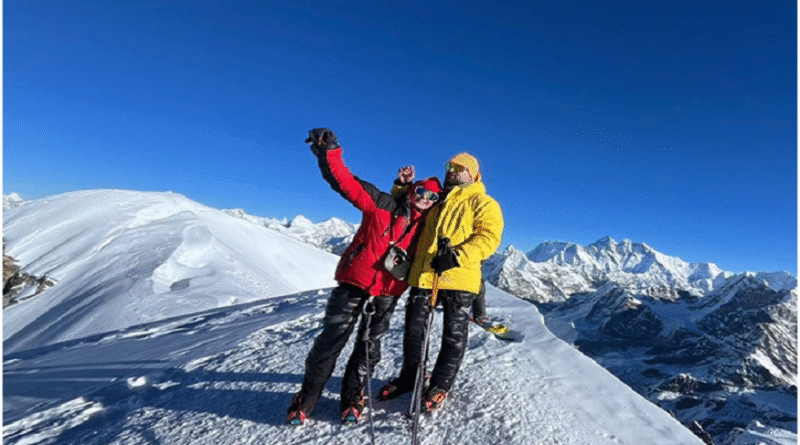
Island Peak is often described as a beginner’s climbing peak, but that description can be a little misleading. Yes, it is considered suitable for first-time climbers. Yes, many people attempt it after doing the Everest base camp trek. But standing there at over 6,000 meters, wearing crampons, tied to a rope, looking at glaciers and steep slopes—nothing about it feels “easy.” The name “Island Peak” comes from how it appears, like an island rising from a sea of ice. When you approach the mountain, the scenery slowly transforms. Green valleys disappear, rocks dominate, and then ice and snow take over. This transition alone already feels dramatic. What makes Island Peak so attractive is its perfect balance. It is challenging enough to feel like a serious climb, but not so technical that only elite mountaineers can try. Climbers learn basic rope work, glacier travel, and use of climbing gear. For many people, this is the first time they truly feel like a climber rather than just a trekker. And mentally, this climb does something interesting. You start doubting yourself at high altitudes. Breathing becomes slow. Steps become heavy. But when you finally reach the summit ridge and see giants like Lhotse and Ama Dablam nearby, the tiredness suddenly feels small, almost irrelevant.
Lubuche Peak climbing—sharper, steeper, more intense
Lubuche Peak has a slightly different personality. Where Island Peak feels like an introduction, Lobuche feels like a test. It is more technical and more demanding and requires stronger preparation. There are actually two summits—Lobuche East and Lobuche West—but most climbing itineraries focus on Lobuche East. Even then, the climb is not just a simple walk. There are steep sections, mixed terrain, and exposed ridges where concentration becomes more important than physical strength. Many climbers attempt Lobuche Peak after gaining experience on other trekking peaks. The mountain demands respect. The weather changes quickly. Snow conditions vary. Small mistakes can become serious issues. Yet this is exactly why some people love it more. Lubuche Peak gives that raw, honest mountain feeling. Less crowded, less commercial, more personal. The summit view is wide and powerful, stretching across the Everest massif. You don’t just see mountains; you feel surrounded by them. The climb also teaches patience. Progress is slow. Altitude reminds you who is really in control. The ego slowly fades, replaced by careful movement and quiet focus. It is a climb that shapes character more than muscles.
Mere Peak Climbing—high altitude, big horizons
A mere peek is a different story altogether. Technically, it is often considered less complex than Lubuche. But altitude, that silent giant, becomes the real challenge here. The peak stands above 6,400 meters, making it one of the highest trekking peaks in Nepal. The climb itself is more straightforward, with long snow slopes rather than steep technical walls. But the elevation changes everything. At these heights, the body reacts differently. Energy drains faster. Simple tasks feel strangely tiring. Sleep becomes lighter. Every movement asks for extra effort. But then, the reward. Mera Peak is famous for its extraordinary panorama. From the summit, you can see five of the world’s highest mountains—Everest, Lhotse, Makalu, Cho Oyu, and Kanchenjunga. This is not just a scenic moment. It is overwhelming in a quiet, almost emotional way. The journey to Mera is also unique. The route passes through remote valleys, dense forests, traditional villages, and landscapes that feel less touched by heavy trekking traffic. The experience feels peaceful, almost meditative, at times. Mera Peak Climbing often becomes a favorite for those who dream of extreme altitude but prefer less technical difficulty. It is physically demanding, yes. But it offers a sense of vastness that is hard to describe with simple words.
Everest Three Passes Trek—The Grand Circuit of Challenges
If climbing peaks is about vertical dreams, the Everest Three Pass Trek is about horizontal endurance and exploration. This trek is not just a route; it feels like a full expedition across the heart of the Khumbu region. The three passes—Kongma La, Cho La, and Renjo La—each bring their own difficulty. steep ascents, rocky trails, snow-covered sections, and unpredictable weather. This trek is not designed for casual walking. It asks for stamina, patience, and mental resilience. What makes the three-pass trek truly special is its diversity. One day you walk beside glaciers. The next day you cross icy ridges. Then you descend into quiet valleys, pass turquoise lakes, and enter villages where life moves at a completely different rhythm. Unlike single-destination treks, this journey constantly changes perspective. Mountains appear from new angles. Familiar peaks look different. Everest itself feels like a companion rather than a distant objective.
The trek also carries a deep psychological dimension. Long days, thin air, physical exhaustion—all these things slowly reshape your mindset. You begin to move slower, think simpler, and appreciate small comforts like warm tea or sunlight after a cold morning. Many trekkers describe the three-pass trek as one of the most complete Himalayan experiences. It combines challenge, scenery, solitude, and cultural encounters in a way that feels very organic, very real.
Choosing between climbing and trekking—different dreams, same mountains
People often ask which adventure is better—peak climbing or high-altitude trekking. Honestly, this question never has a single answer. Climbing peaks like Island, Lobuche, or Mera gives a strong sense of achievement. There is something deeply satisfying about standing on a summit, knowing you moved upward against gravity, weather, and your own doubts. Trekking, especially something like the Everest Three Passes Trek, offers a broader experience. More landscapes, more villages, more time to absorb the region slowly. It feels like living in the mountains rather than conquering them. Some travelers even combine both worlds—trekking first, then climbing. This approach allows gradual acclimatization and builds confidence before stepping onto snow slopes and glaciers. In the end, it is less about difficulty and more about personality. Some people love the focused intensity of climbing. Others enjoy the flowing rhythm of trekking. Both paths lead to unforgettable memories.
The invisible challenge—altitude and mindset
No matter which route you choose, altitude remains the true master of the Everest region. It does not shout; it whispers. Slowly, steadily, it reminds you of limits. Headaches, fatigue, and breathlessness—these are common companions at high elevation. Acclimatization becomes not just a strategy but a necessity. Rest days are not laziness. Slow walking is not a weakness. But beyond physical effects, altitude also changes how you think. Life simplifies. Priorities shift. Small details suddenly matter more. The experience becomes less about speed and more about presence. This mental transformation is often the most lasting souvenir. Long after returning home, many travelers realize the mountains changed something subtle inside them.
Why do these adventures stay unforgettable?
There are many treks and climbs in the world. Many beautiful landscapes. many exciting challenges. Yet something about the Everest region feels different. Maybe it is the scale of the mountains. Maybe it is the Sherpa culture, the monasteries, and the prayer flags moving with the wind. Maybe it is the way hardship and beauty coexist so naturally there. Island Peak climbing brings the thrill of first real mountaineering. Lubuche Peak climbing delivers intensity and technical flair. Mera Peak climbing offers altitude drama and huge panoramas. The Everest Three Passes trek provides a grand, immersive journey. different paths, different styles, same deep impact. Because in these mountains, the journey never stays only physical. It becomes emotional, psychological, and sometimes even philosophical without you noticing.
And that is why people keep returning. not only to see Everest again but also to feel that rare mixture of effort, silence, and awe that is very hard to find anywhere else.
Contact Details
——————————–
Company address: Everest Trekking Routes Pvt. Ltd.
16 Khumbu, Nayabazaar, Kathmandu, Nepal
Mobile: +977-9843467921 (Rabin)
Email: info@everesttrekkingroutes.com
URL:– www.everesttrekkingroutes.com